

Die abgeschirmte Region: Wie der indische Staat den Widerstand der Adivasi-Jugendlichen in Bastar kriminalisierte (Englisch)
Raghu Midiami, erstwhile president of the Mulwasi Bachao Manch [Platform to Save the Indigenous People]. Photo by Sakhi / The Polis Project
The Polis Project / By Malini Subramaniam
June 27, 2026
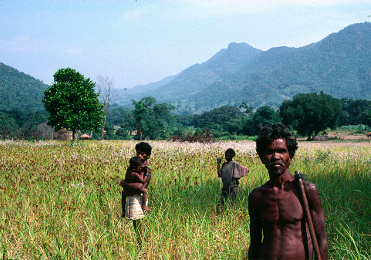
It was the onset of the harsh summer month of March in the central Indian state of Chhattisgarh. In the state’s southern region, Bastar, the forest was heavy with the sweet scent of Mahuva flowers. The Gond tribe spent the early mornings here with their families, gathering the fallen Mahuva. But five Gond youth were notably missing— unable to participate in this community activity—as they had been undertrials in a Jagdalpur prison.
On March 10, they were brought for their scheduled ‘peshi’ (appearance) at the Jagdalpur district court. The premises house the National Investigation Agency’s special court, which handles cases related to the banned Maoist party in the Bastar division.
Four young men stood in pairs; one woman was restrained separately, under the watch of a policewoman. These handcuffed Gond youth—first-generation literates who grew up facing forced displacements and state-backed violence—had led peaceful protests for their community rights over the land and forest. Then, the Indian state deployed its most powerful legal machinery against them: stacking multiple criminal cases, invoking anti-terror laws and ultimately deploying the National Investigation Agency to investigate and prosecute them.
The defense lawyers of the incarcerated youth claim that these cases are fabricated.